Back to Blog
Wellness5 min read
Self-Care Rituals for Midlife Wellness
Midlife isn't a decline—it's a transformation. Here are science-backed self-care practices that support your body through the transition.
Midlife isn't a decline—it's a transformation. But navigating this season requires intention, not just survival mode. The habits that served you in your 30s may not be enough now. Your body is shifting, your hormones are recalibrating, and your self-care routine needs to evolve with you.
Here are science-backed practices that actually support your body through the transition—not just another bubble bath suggestion.
1. Prioritize Sleep Like It's Your Job
Estrogen and progesterone directly influence sleep quality. As these hormones fluctuate during perimenopause and menopause, you may find yourself waking at 3 AM, struggling to fall asleep, or waking up drenched in sweat. Create a non-negotiable wind-down routine: dim lights an hour before bed, keep your room cool (65–68°F), and consider magnesium glycinate—research shows it supports both sleep quality and hormonal balance.
Estrogen and progesterone directly influence sleep quality. As these hormones fluctuate during perimenopause and menopause, you may find yourself waking at 3 AM, struggling to fall asleep, or waking up drenched in sweat. Create a non-negotiable wind-down routine: dim lights an hour before bed, keep your room cool (65–68°F), and consider magnesium glycinate—research shows it supports both sleep quality and hormonal balance.
2. Move Your Body—But Differently
High-intensity workouts that used to energize you might now leave you depleted. That's not weakness—it's cortisol. During midlife, your stress response is already elevated. Swap some HIIT sessions for strength training, yoga, or brisk walking. Resistance training is especially critical: it preserves bone density, supports metabolism, and helps regulate blood sugar—all things that shift during menopause.
High-intensity workouts that used to energize you might now leave you depleted. That's not weakness—it's cortisol. During midlife, your stress response is already elevated. Swap some HIIT sessions for strength training, yoga, or brisk walking. Resistance training is especially critical: it preserves bone density, supports metabolism, and helps regulate blood sugar—all things that shift during menopause.
3. Feed Your Hormones
Your nutritional needs change in midlife. Focus on phytoestrogens (flaxseed, soy, chickpeas), omega-3 fatty acids (salmon, walnuts, chia seeds), and protein at every meal. Protein supports muscle mass and hair health—two things that take a hit during menopause. And don't skip meals. Blood sugar crashes amplify hot flashes, anxiety, and brain fog.
Your nutritional needs change in midlife. Focus on phytoestrogens (flaxseed, soy, chickpeas), omega-3 fatty acids (salmon, walnuts, chia seeds), and protein at every meal. Protein supports muscle mass and hair health—two things that take a hit during menopause. And don't skip meals. Blood sugar crashes amplify hot flashes, anxiety, and brain fog.
4. Address Your Scalp
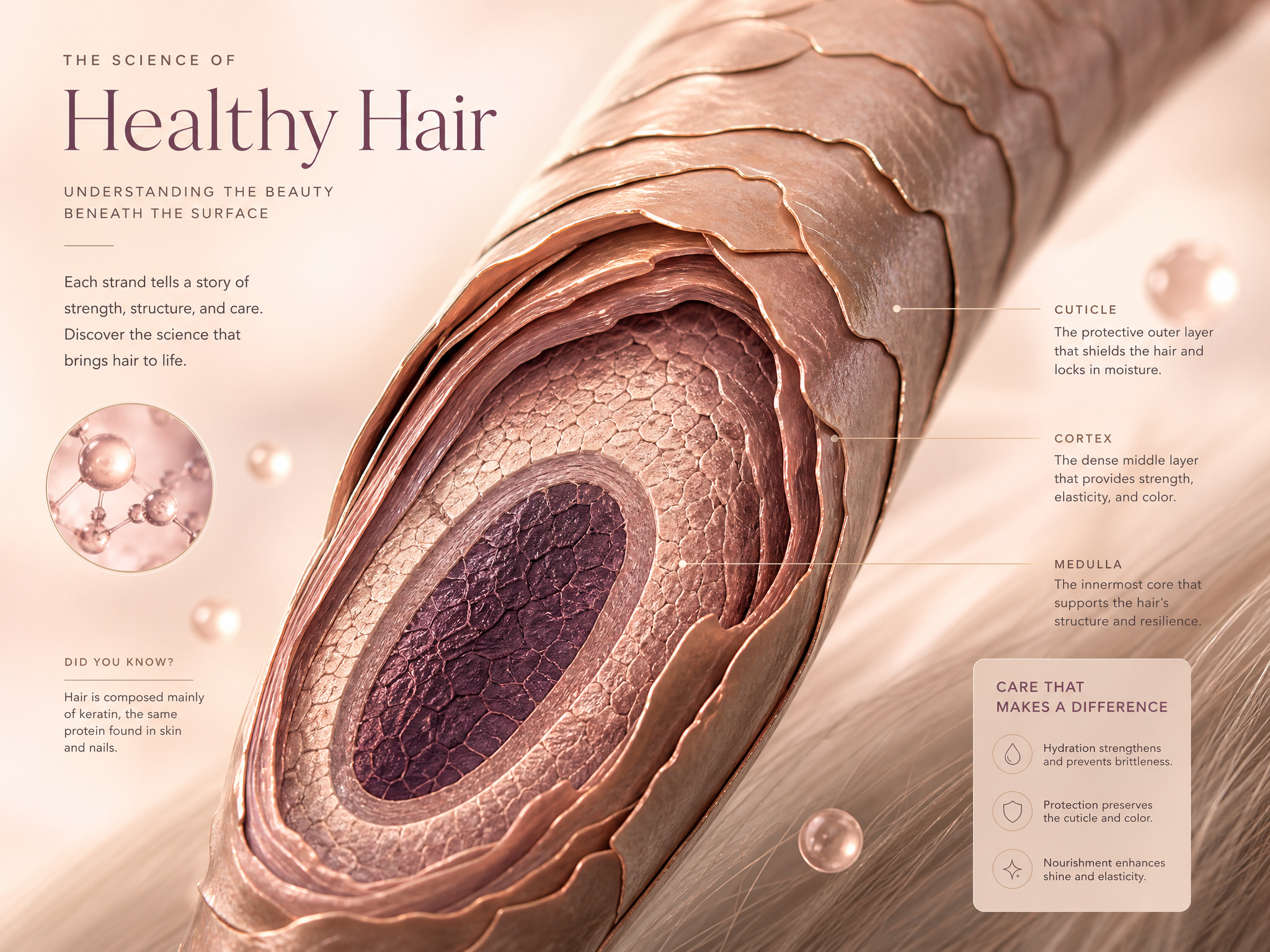
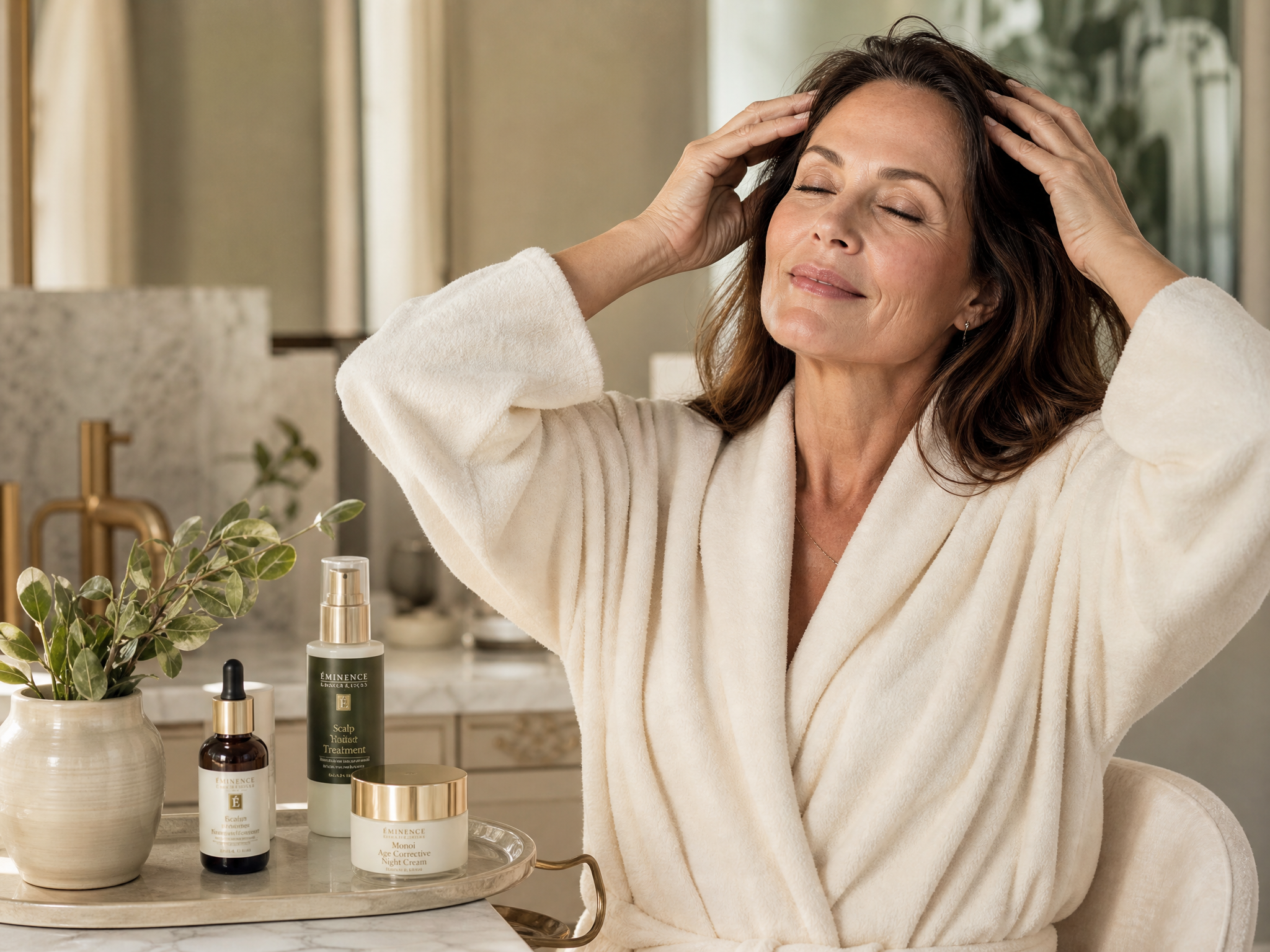
Your scalp is skin. During hormonal transitions, it can become dry, irritated, or produce excess oil as it tries to compensate for shifting sebum production. A weekly scalp treatment—gentle exfoliation, hydrating serums, or targeted trichology products—can make a real difference in how your hair looks and feels.
Your scalp is skin. During hormonal transitions, it can become dry, irritated, or produce excess oil as it tries to compensate for shifting sebum production. A weekly scalp treatment—gentle exfoliation, hydrating serums, or targeted trichology products—can make a real difference in how your hair looks and feels.
5. Protect Your Mental Health
The emotional toll of midlife changes is real and valid. Anxiety, mood swings, and a sense of identity loss are common—and they're not "just in your head." They're neurochemical. Talk to someone. Journal. Find your community. The Menopause Mafia exists because no woman should navigate this alone.
The emotional toll of midlife changes is real and valid. Anxiety, mood swings, and a sense of identity loss are common—and they're not "just in your head." They're neurochemical. Talk to someone. Journal. Find your community. The Menopause Mafia exists because no woman should navigate this alone.
Self-care during midlife isn't selfish—it's strategic. It's how you show up for yourself so you can show up for everything else.

Written by Kerri
Board Certified Trichologist, Menopause Coach, and 30+ year licensed cosmetologist. Founder of The Second Spring Hormone & Scalp Studio in Kearney, MO.
Ready for personalized answers?
Book Your Blueprint Consultation — $149