Back to Blog
Scalp Health4 min read
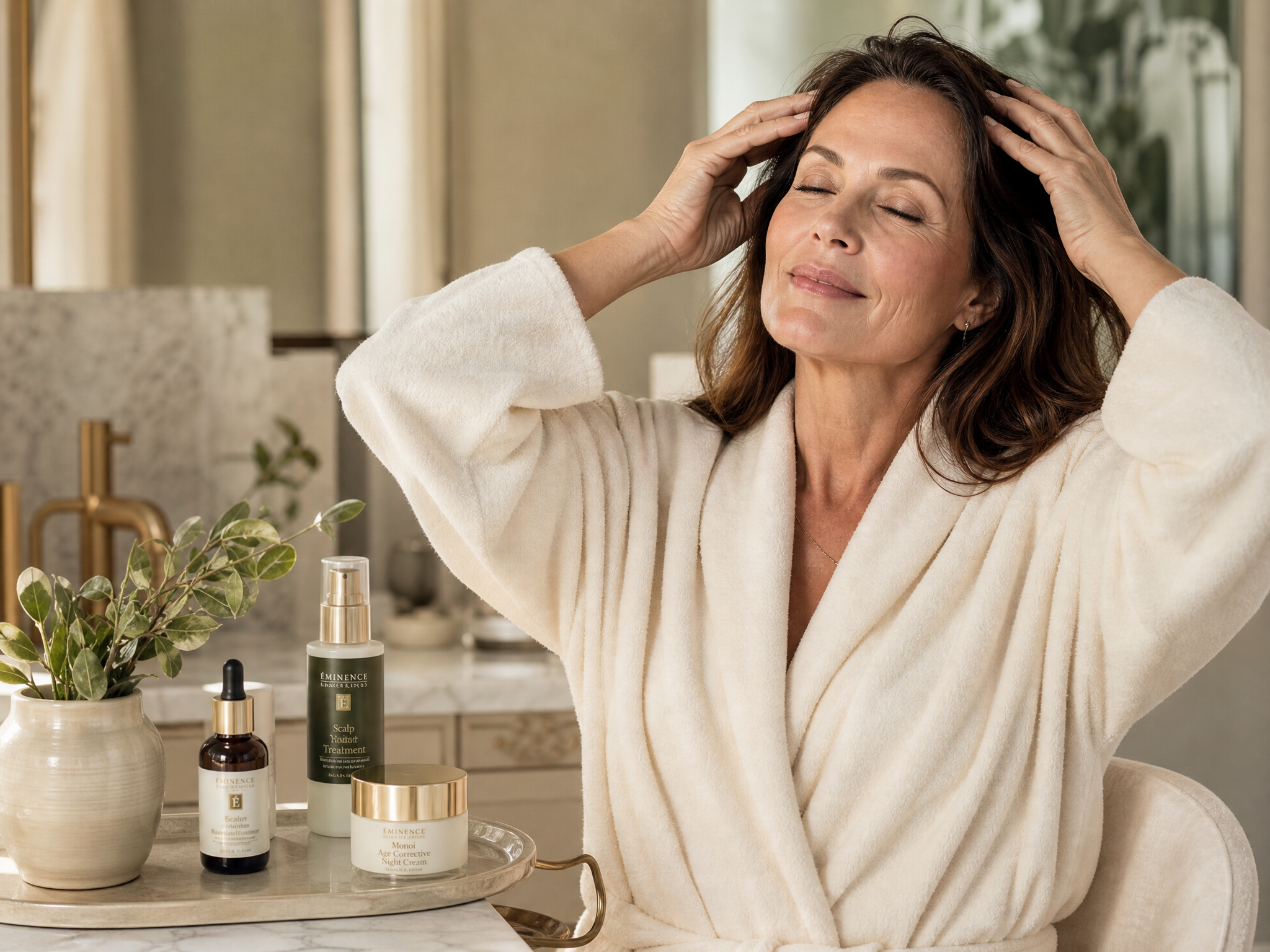
Your Scalp Is Skin—Treat It That Way
We invest in skincare routines for our face, but completely neglect the skin on our heads. Here's why scalp care matters.
Think about your skincare routine. You cleanse, you exfoliate, you moisturize, you protect. Now think about your scalp. When was the last time you gave it even half that attention?
Your scalp is skin—the same skin that continues from your forehead up over the crown of your head. It has pores, oil glands, a microbiome, and a blood supply that feeds every single hair follicle. And yet, most of us treat it as nothing more than a surface to wash shampoo through.
Why Scalp Health Matters More Than You Think
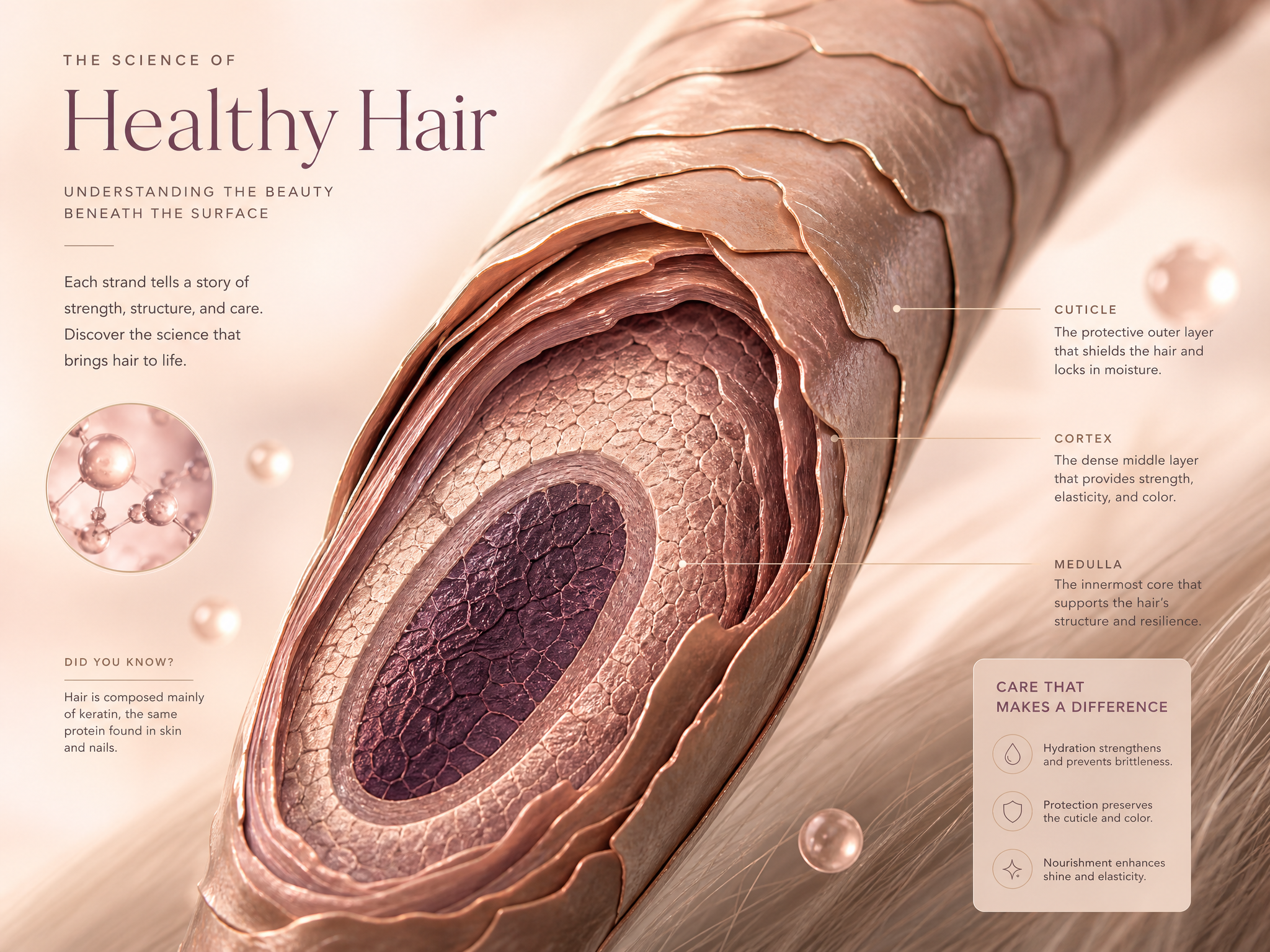
The health of your hair starts beneath the surface. Every strand of hair grows from a follicle embedded in your scalp. If that environment is inflamed, clogged, dehydrated, or out of balance, the hair it produces will reflect that—thinner, weaker, slower-growing, or falling out altogether.
The health of your hair starts beneath the surface. Every strand of hair grows from a follicle embedded in your scalp. If that environment is inflamed, clogged, dehydrated, or out of balance, the hair it produces will reflect that—thinner, weaker, slower-growing, or falling out altogether.
Common Scalp Issues During Midlife
Hormonal changes during perimenopause and menopause directly affect your scalp. You might notice:
- Increased dryness or flaking (declining estrogen reduces sebum production)
- Itchiness or sensitivity (inflammation increases with hormonal shifts)
- Excess oiliness at the roots (your scalp overcompensates for dryness)
- Thinning at the crown or part line (follicle miniaturization from DHT sensitivity)
Hormonal changes during perimenopause and menopause directly affect your scalp. You might notice:
- Increased dryness or flaking (declining estrogen reduces sebum production)
- Itchiness or sensitivity (inflammation increases with hormonal shifts)
- Excess oiliness at the roots (your scalp overcompensates for dryness)
- Thinning at the crown or part line (follicle miniaturization from DHT sensitivity)
What a Scalp-First Approach Looks Like
A scalp analysis with a clinical trichologist uses microscopy to examine your scalp at 200x magnification. We can see follicle density, oil production, inflammation, buildup, and early signs of miniaturization—long before you notice visible thinning.
From there, a targeted plan might include:
- Clinical-grade scalp serums that address your specific imbalance
- Gentle exfoliation to clear follicle-clogging buildup
- Low-level light therapy to stimulate blood flow and cellular activity
- Nutritional support based on blood work analysis
A scalp analysis with a clinical trichologist uses microscopy to examine your scalp at 200x magnification. We can see follicle density, oil production, inflammation, buildup, and early signs of miniaturization—long before you notice visible thinning.
From there, a targeted plan might include:
- Clinical-grade scalp serums that address your specific imbalance
- Gentle exfoliation to clear follicle-clogging buildup
- Low-level light therapy to stimulate blood flow and cellular activity
- Nutritional support based on blood work analysis
The Bottom Line
If you're investing in anti-aging skincare for your face but ignoring the skin on your head, you're missing the foundation. Healthy hair starts with a healthy scalp. And a healthy scalp starts with someone who knows how to read it.
If you're investing in anti-aging skincare for your face but ignoring the skin on your head, you're missing the foundation. Healthy hair starts with a healthy scalp. And a healthy scalp starts with someone who knows how to read it.
That's what clinical trichology is. That's what The Second Spring was built for.

Written by Kerri
Board Certified Trichologist, Menopause Coach, and 30+ year licensed cosmetologist. Founder of The Second Spring Hormone & Scalp Studio in Kearney, MO.
Ready for personalized answers?
Book Your Blueprint Consultation — $149